
How to Create a Beautiful Kitchen with Mixed Wood Tones
There was a time in interior design when the “matchy-matchy” look was the golden rule. If your kitchen cabinets were Honey Oak, your floors and trim had to be Honey Oak, too. At Giant Commercial Flooring, we are happy to report that those days are long gone.
In modern Canadian homes—from the coastal escapes of British Columbia to the historic neighborhoods of Ottawa—mixing wood tones is the secret to creating a kitchen that feels layered, curated, and full of character. However, there is a fine line between “intentionally eclectic” and “accidental chaos.”
If you are navigating the world of hardwood, laminate, or luxury vinyl for your kitchen, here is our expert guide on how to mix wood tones like a pro.
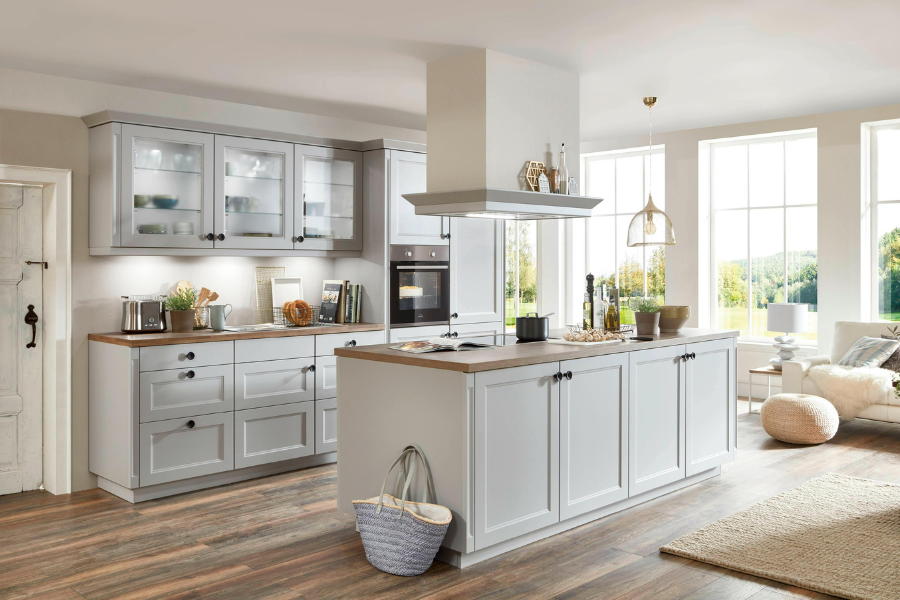
Tips on How to Mix Wood Tones in Your Kitchen Like an Interior Designer
Identify Your Dominant Wood Tone
Before you start browsing our warehouse for a secondary wood, look at the largest wood surface in your kitchen. In most cases, this is either your hardwood floors or your cabinets.
This “dominant” tone will serve as the foundation for the rest of your choices. For example, if you have deep, rich Espresso cabinets, your flooring should act as a complementary partner rather than a twin.
Once you’ve identified your base, every other wood element—be it a butcher block island, floating shelves, or wall accents—should be chosen in relation to it.
Play with Undertones (The Golden Rule)
The biggest mistake homeowners make isn’t mixing different types of wood; it’s mixing different undertones. Wood generally falls into three categories:
- Warm: Yellow, orange, or red undertones (e.g., Natural Cherry, Traditional Oak).
- Cool: Grey, taupe, or “iced” undertones (e.g., Grey-washed Maple, Ash).
- Neutral: Beige or “wheat” tones that don’t lean too heavily in either direction.
The Pro Tip: Keep your undertones consistent. If your hardwood floors have a cool, greyish undertone, your wood cabinets or wall paneling should also have a cool lean, even if they are much darker or lighter. Mixing a “cool” grey floor with “warm” orange cabinets often creates a visual clash that feels unsettled.
Create High Contrast
If you want to mix woods successfully, you need to be intentional about the difference in depth. If two wood tones are almost the same but not quite, it looks like an error. Instead, aim for at least two to three shades of difference.
- Dark Floors, Light Cabinets: A trending look involves pairing a dark, sophisticated Walnut floor with light White Oak or painted cabinets.
- Light Floors, Dark Accents: If you have a bright, airy kitchen with natural-toned flooring, consider a dark wood island or floating shelves to ground the space and add a “pop” of visual weight.
Use “Bridge” Elements
If you’re worried that your light floors and dark cabinets feel too disconnected, use “bridge” elements to tie them together.
- The Kitchen Island: Use a wood on your island that incorporates both the light and dark tones found elsewhere in the room.
- Furniture: A dining set or bar stools that feature a medium wood tone can act as a transition between a very light floor and very dark cabinetry.
- Wall Accents: Wood beams or window trim can help pull the floor color up into the vertical space, making the room feel cohesive.
Don’t Forget Texture and Grain
When mixing woods, the “pattern” of the grain matters as much as the color. If your flooring has a very busy, rustic grain with lots of knots (like many TwelveOaks or Fuzion products), try to keep your cabinetry grain more subtle and uniform.
Conversely, if you have very sleek, modern cabinets, a high-character wood floor adds the perfect touch of organic warmth.
Break It Up with Rugs and Paint
Sometimes, you might find yourself with two wood tones that are just a bit too similar. You can “break the eye” by placing a runner or area rug between the cabinets and the floor.
This creates a visual buffer that allows the two woods to coexist without being compared side-by-side.
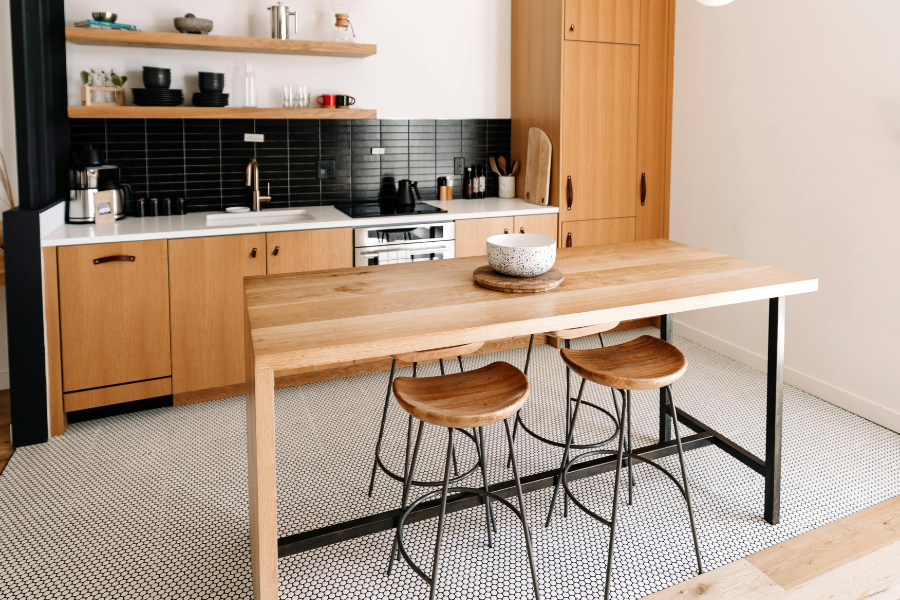
Shop for New Kitchen Wood Flooring for Your Home with GC Flooring
At GC Flooring, we understand that your kitchen is the heart of your home. Choosing the right floor to complement your existing cabinets and walls is a big decision.
Because we carry a massive inventory of Solid Hardwood, Engineered Hardwood, and Luxury Vinyl, we can help you find the exact plank that bridges the gap between your design elements.
Since 1995, we’ve helped families across all 10 provinces realize their dreams for the perfect floor. Whether you’re looking for the high-performance durability of Shaw COREtec LVP for a busy kitchen or the timeless beauty of Mercier Wood Flooring, we have the stock and the expertise to make it happen.
Call or visit Giant Commercial Flooring (GC Flooring) .We service all of Canada’s 10 provinces, delivering quality you can stand behind.
- British Columbia
- Alberta
- Saskatchewan
- Manitoba
- Ontario
- Quebec
- New Brunswick
- Prince Edward Island
- Nova Scotia
- Newfoundland and Labrador
About Giant Commercial Flooring
Since 1995, Giant Commercial Flooring has been enhancing Canadian homes and businesses with premium, high-value flooring backed by a family-founded commitment to honesty.
Based in Ottawa and servicing all 10 provinces, we offer unbeatable pricing on top-tier brands by buying in bulk and maintaining a massive, ready-to-ship inventory. Unlike the impersonal experience of big-box stores, our expert team—and often the owners themselves—personally guides you through our curated selection of hardwood, vinyl, and laminate to find the perfect fit for your durability needs and budget.
We don’t just sell floors; we stand behind them with a satisfaction guarantee, ensuring you get the highest quality products underfoot, delivered with the professional care you deserve.