
The Complete Guide to the Best Underlayment for Laminate Flooring
When planning a laminate flooring renovation, it is easy to focus all your attention on the surface debating between wide-plank European white oaks, rich honey walnuts, or subtle wire-brushed textures. However, the true secret to a floor that looks, sounds, and performs like a dream lies directly beneath it: the underlayment.
Laminate is engineered as a floating floor system, meaning the planks interlock over your subfloor without nails, staples, or glue. Without the proper underlayment, even the most premium laminate can feel hollow, creak underfoot, or suffer irreversible damage from subfloor moisture.
Whether you are finishing a basement, updating an open-concept main floor, or outfitting a commercial space, choosing the right underlayment ensures your investment stays protected for decades to come.
Why Laminate Flooring Requires the Right Underlayment
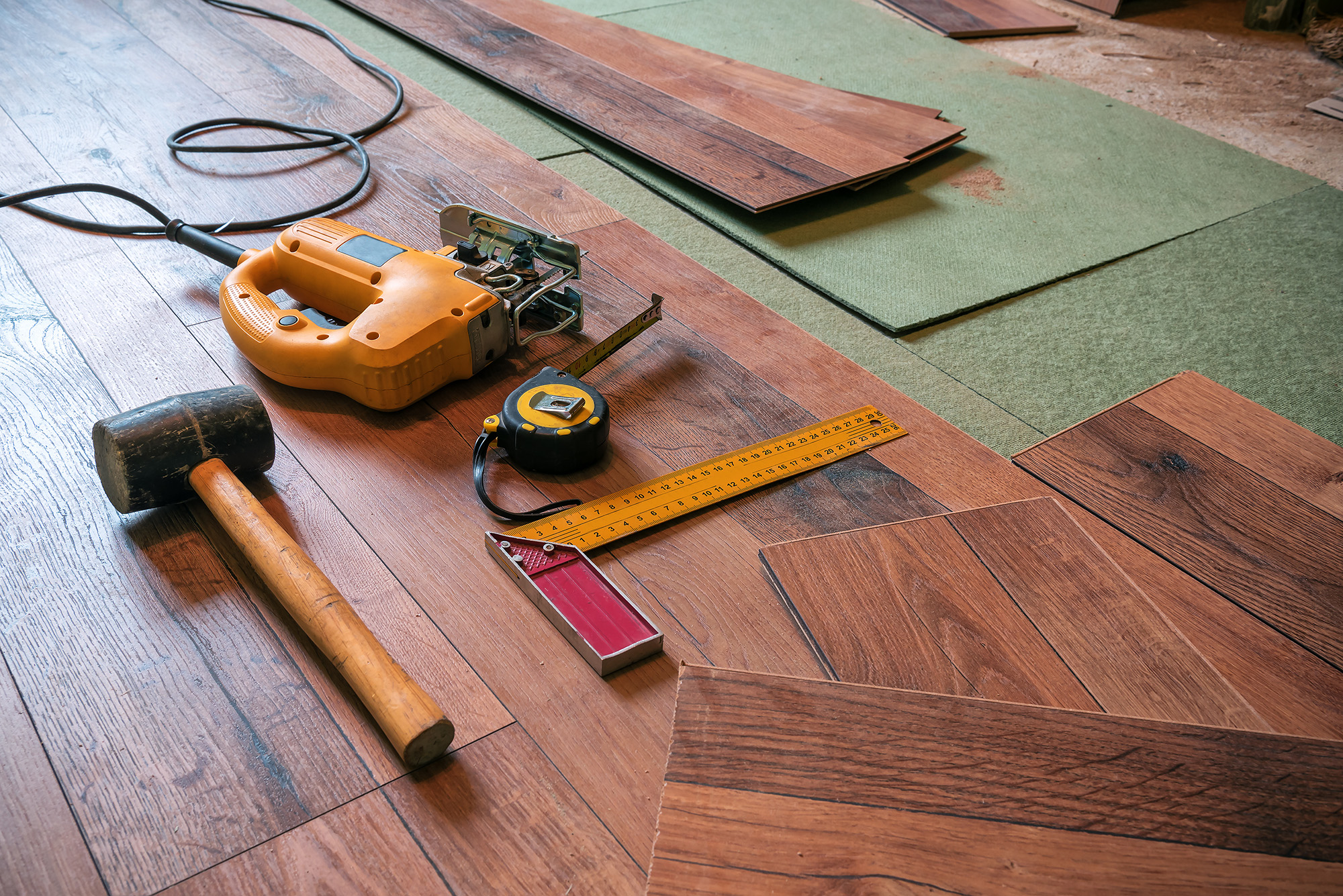
Underlayment is not merely an optional upgrade; it is the structural support system for your entire floor. A high-performance underlayment serves four critical functions:
- Vapor & Moisture Protection: Subfloors, especially concrete slabs, naturally release moisture vapour. A quality underlayment acts as an impermeable barrier that stops ground moisture from migrating into your laminate’s high-density fiberboard (HDF) core, preventing edge swelling, cupping, and seam separation.
- Acoustic Dampening: Because floating floors sit over an open subfloor, walking across unpadded laminate can produce a sharp, hollow “clicking” or drumming sound. Dense underlayment absorbs impact sound (footsteps, dropped toys, pet claws) as well as airborne sound transferring between multi-level floors.
- Thermal Insulation: Underlayment creates a subtle thermal break that insulates against cold subfloors, keeping your floors noticeably warmer underfoot during chilly Canadian winter mornings.
- Subfloor Smoothing & Joint Support: While underlayment cannot fix a severely unlevel floor, it bridges minor subfloor imperfections and rough textures, providing a flat, stable foundation that protects your floor’s precision-milled click-lock joints from stress and cracking.
Top Underlayment Types: Which One Is Best for You?
Not all underlayments are created equal. Depending on your subfloor type, location in the home, and budget, here is how the top materials compare:
High-Density Closed-Cell Foam (With Integrated Vapor Barrier)
Standard low-density white foam is often sold cheaply in big-box stores, but it easily crushes flat under heavy furniture within a couple of years. In contrast, high-density, closed-cell polyethylene foam laminated with an integrated 6-mil poly moisture barrier is the gold standard for everyday residential applications.
- Best For: General main-floor installations over concrete or plywood.
- The Benefit: It offers a balanced combination of moisture protection, cushioning, and affordability without collapsing over time under heavy daily traffic.
High-Density Acoustic Rubber
If you want your laminate to sound and feel like solid 3/4″ nailed-down hardwood, dense rubber underlayment is the premier choice.
- Best For: Condominiums, second-floor bedrooms, busy hallways, and home offices.
- The Benefit: Heavy rubber provides outstanding impact sound insulation (IIC ratings) and prevents hollow-sounding footfall. It also offers extreme compression resistance, meaning it will never compress under heavy appliances, grand pianos, or large kitchen islands.
Natural Cork
Natural cork is an eco-friendly underlayment renowned for its natural thermal insulation and acoustic properties.
- Best For: Upper-level plywood subfloors and homes seeking sustainable, hypoallergenic materials.
- The Benefit: Cork naturally resists mold, mildew, and rot while maintaining its elasticity for decades. Note: Because cork is naturally porous, if you are installing over a concrete slab, it must be paired with an independent 6-mil polyethylene moisture barrier.
Recycled Dense Felt
Manufactured by compressing recycled textile fibers into an ultra-dense pad, felt is an exceptional sound absorber.
- Best For: Homeowners prioritizing sound deadening and subfloor leveling over wood subfloors.
- The Benefit: Its dense construction absorbs sound vibrations exceptionally well and can smooth out minor telegraphing imperfections on older wooden subfloors. Like cork, felt requires an added moisture barrier when laid over concrete.
What About Laminate with an Attached Pad?
 Many modern premium laminate collections from top manufacturers like Mohawk / Pergo, TORLYS, and TwelveOaks come with an acoustic backing pre-attached to the bottom of each plank.
- Over Plywood/OSB Subfloors: If your laminate has a built-in pad and is being installed over a dry wooden subfloor, you typically do not need to install an extra layer of underlayment. In fact, adding a second foam underlayment makes the floor too soft, which can bend and snap the click-lock joints.
- Over Concrete Subfloors: Even with an attached pad, you still need a dedicated moisture barrier (such as a 6-mil poly vapour barrier film) laid across the concrete before installing your planks. An attached acoustic pad does not prevent ground moisture from rising into the HDF core.
Key Ratings to Check Before You Buy
When reviewing technical specifications for underlayment, pay close attention to two standard sound ratings:
- IIC (Impact Insulation Class): Measures impact sound reduction through the floor/ceiling assembly into the room below (such as footsteps or dropped objects). Look for an IIC rating of 70 or higher for maximum quiet, particularly in multi-family buildings and two-story homes.
- STC (Sound Transmission Class): Measures airborne sound reduction (such as voices, televisions, and music). An STC rating of 60+ delivers exceptional privacy between levels.
Superior Flooring, Honest Advice, and Direct Value: Call GC Flooring Today!
At Giant Commercial Flooring, we know that installing a new floor is a significant investment, and it simply has to be done right. That is why we refuse to let you get lost in the confusing aisles of big-box retailers. Since opening our doors in 1995, our friendly, professional staff take the time to understand your home and recommend practical solutions that match your budget and lifestyle.
We are a proud family-run business where hard work, honesty, and superior customer care sit at the heart of everything we do.
- British Columbia
- Alberta
- Saskatchewan
- Manitoba
- Ontario
- Quebec
- New Brunswick
- Prince Edward Island
- Nova Scotia
- Newfoundland and Labrador
About Giant Commercial Flooring
Since 1995, Giant Commercial Flooring has been enhancing Canadian homes and businesses with premium, high-value flooring backed by a family-founded commitment to honesty.
Based in Ottawa and servicing all 10 provinces, we offer unbeatable pricing on top-tier brands by buying in bulk and maintaining a massive, ready-to-ship inventory. Unlike the impersonal experience of big-box stores, our expert team—and often the owners themselves—personally guides you through our curated selection of hardwood, vinyl, and laminate to find the perfect fit for your durability needs and budget.
We don’t just sell floors; we stand behind them with a satisfaction guarantee, ensuring you get the highest quality products underfoot, delivered with the professional care you deserve.